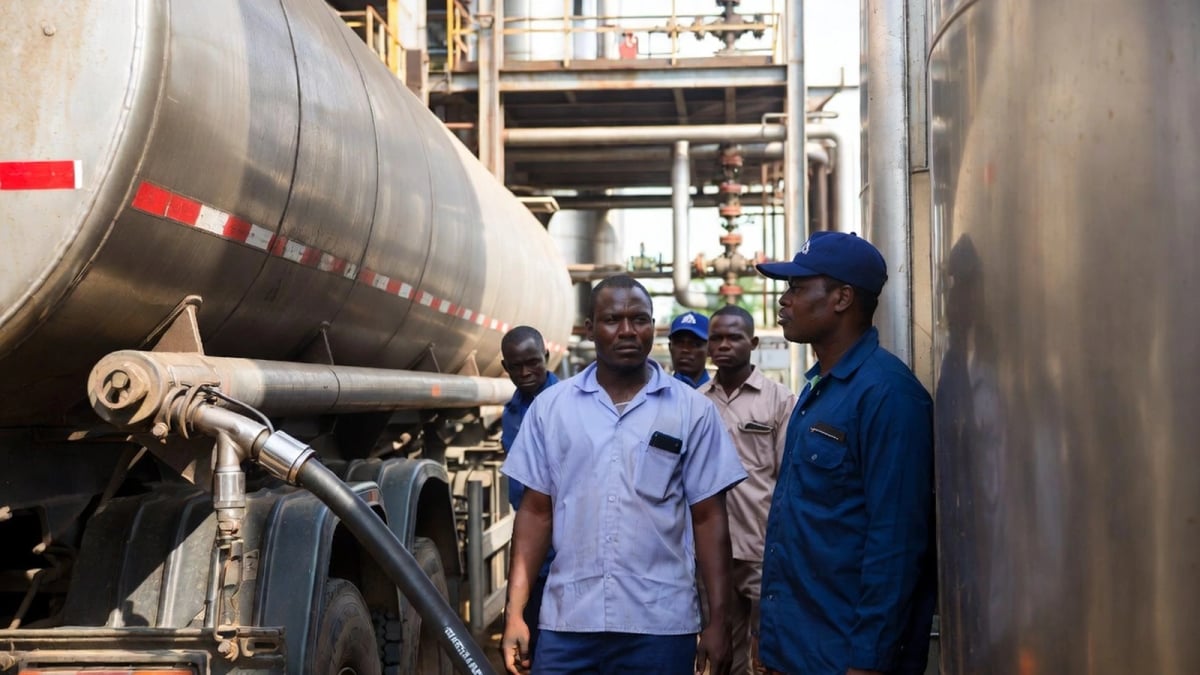
Bulk fuel and LPG supply for a manufacturing plant
A manufacturing plant required reliable bulk fuel and LPG supply to maintain production. The Project Office structured a continuity programme around the plant's operating schedule.
Project Profile
Sector: Heavy Manufacturing — Industrial Processing Facility Location: Tema Industrial Corridor, Ghana Scope: Structured bulk diesel supply, industrial LPG delivery, and ongoing stock-level management for a high-throughput manufacturing operation Engagement Duration: Long-term supply relationship, quarterly schedule reviews
A large-scale manufacturing facility operating continuous production lines across multiple shifts approached Kronix Energy to replace an ad hoc fuel procurement arrangement that had introduced operational uncertainty into their energy supply chain. The facility’s requirements spanned bulk diesel for captive power generation and heavy plant, alongside industrial LPG supporting thermal processing equipment — a dual-fuel dependency that demanded consistent, documented delivery rather than reactive spot purchasing.
Specification Challenge
Manufacturing operations with continuous shift cycles carry near-zero tolerance for fuel interruption. Any unplanned gap in diesel availability translates directly to generator downtime and production line stoppages — losses that cascade across fulfilment schedules and labour deployment.
The added complexity was the LPG component. Industrial LPG supply for thermal processing requires coordinated delivery timing, proper vessel management, and documentation that satisfies both internal HSE governance and regulatory compliance frameworks. The facility’s existing procurement arrangement had no documented handover process, no stock-level visibility protocol, and no structured communication pathway between the supply chain and the plant’s engineering and safety teams.
The challenge was not simply supply volume — it was supply architecture.
Approach
Kronix Energy initiated the engagement with a pre-execution site assessment, reviewing the facility’s storage infrastructure, consumption patterns across shift cycles, and the HSE compliance requirements applicable to both diesel and LPG handling on site.
A structured supply programme was then drafted in consultation with the facility’s operations and procurement teams. Key elements included:
- Documented delivery schedules tied to actual consumption data, not calendar approximation
- Stock-level reporting at each delivery handover, providing the client’s engineering team with running visibility into reserve margins
- LPG vessel coordination managed to prevent crossover between delivery windows and active production runs, reducing handling risk during peak operational hours
- HSE-aligned documentation at every handover point — delivery notes, volume verification, and driver compliance records — structured to support the facility’s own internal safety audit requirements
- Escalation protocol establishing a direct communication line between Kronix operations personnel and the facility’s plant manager for any deviation from scheduled delivery
Throughout the supply programme, multi-stage sign-off checkpoints were maintained — at dispatch, on arrival, and post-delivery — to ensure that no deviation in specification or volume passed through without documented acknowledgement on both sides.
Outcome
The facility transitioned from reactive, unscheduled procurement to a fully structured supply programme with predictable delivery windows and documented stock visibility. Generator downtime attributable to fuel supply gaps was eliminated within the first operational quarter. The LPG component was integrated into the facility’s maintenance scheduling calendar, removing the coordination friction that had previously placed thermal processing operations at risk.
The facility’s HSE team cited the quality of handover documentation as materially improving their internal compliance reporting posture.
What This Project Demonstrates
Manufacturing operations across Ghana’s industrial corridors share a common vulnerability: energy supply chains that were never architected for the operational demands placed on them. Kronix Energy’s value in this sector is not simply the reliable delivery of fuel — it is the supply discipline that allows plant managers, safety officers, and procurement leads to operate with confidence that every litre is accounted for, every handover is documented, and every delivery is executed to the same standard as the last.
That is the supply discipline institutions build on.