The problem
Institutional buyers need a documented, HSE-disciplined source for industrial fuel solutions.
Our approach
Industrial Fuel Solutions
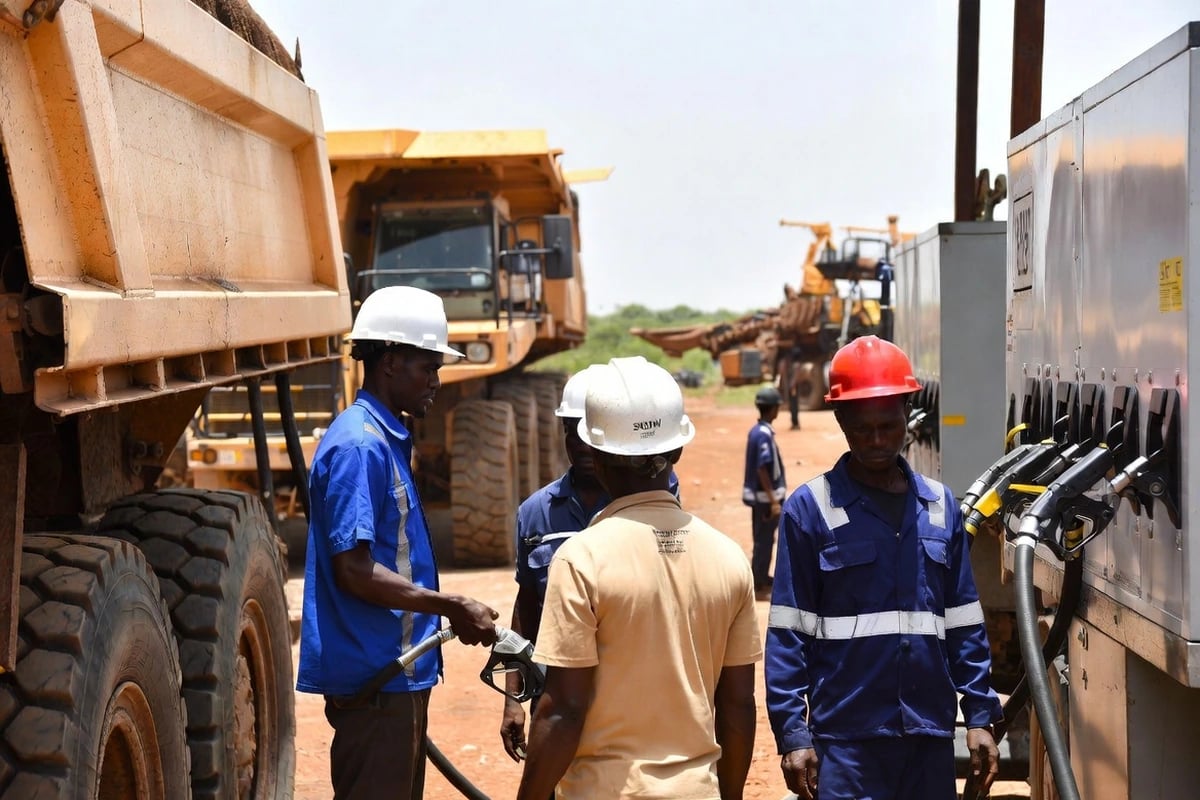
Industrial Fuel Solutions delivered to institutional standard — structured procurement, chain-of-custody discipline, documented handover.
The Challenge
Industrial operations across Ghana and Togo run on continuity. A mine processing facility, a manufacturing plant operating on rotating shifts, or a government-contracted logistics depot cannot absorb the downstream cost of supply disruption — delayed consignments, unverified product quality, or documentation gaps that stall customs clearance and finance reconciliation. The procurement of industrial fuel at institutional scale is not a transactional exercise; it is a supply chain discipline requiring structured intake, chain-of-custody traceability, and a counterparty that treats every handover as a documented obligation.
The sector compounds this challenge further. Industrial clients operating across Ghana and Togo regularly manage multi-site consumption with inconsistent delivery windows, variable storage infrastructure, and procurement teams accountable to finance, operations, and environmental compliance simultaneously. Without a supply partner aligned to all three, the friction accumulates — in inventory shortfalls, in HSE audit gaps, and in the operational downtime that boardrooms measure in direct cost.
The Kronix Energy Solution
Kronix Energy approaches industrial fuel supply through a process architecture designed for the institutional buyer. Engagement begins with a pre-supply survey and specification sign-off — a formal assessment of the client’s consumption profile, storage configuration, delivery access, and compliance obligations before the first consignment moves. This document governs the entire supply relationship, eliminating ambiguity at the point of execution.
Throughout the supply cycle, multi-stage quality control checkpoints are applied: product verification at source, consignment documentation review, and on-site receipt confirmation at the client facility. Every handover is recorded. Every deviation from the agreed specification is flagged before it reaches the client’s operations. This is not procedural theatre — it is the supply discipline that mines, manufacturers, aviation ground handlers, and institutional fuel users in both Ghana and Togo have built their procurement confidence on.
Post-supply, Kronix Energy maintains a documented aftercare and review schedule aligned to the client’s operational calendar. Consumption reporting, delivery performance review, and compliance documentation are maintained as standing obligations — not reactive responses.
Supply + Process Specification
- Pre-supply specification document: consumption profiling, storage survey, and access assessment signed off before first delivery
- Chain-of-custody documentation: product verification at source, in-transit records, and formal receipt confirmation at every handover point
- HSE-aligned delivery protocols: site-specific safety procedures observed at each client facility, consistent with ISO 45001 occupational health and safety principles
- Quality management framework: supply execution governed by structured QC checkpoints consistent with ISO 9001 quality management standards
- Environmental compliance documentation: delivery and storage practices supported by records consistent with ISO 14001 environmental management obligations
- Multi-site coordination: structured scheduling and communication protocols for clients managing distributed facilities across Ghana and Togo
Typical Engagement Profile
A standard industrial fuel engagement involves a multi-site manufacturer or extractive operation with continuous-process fuel dependency, requiring scheduled consignments across one or more facilities in Ghana, Togo, or both. Engagements typically begin with a specification and survey phase, move into a structured delivery cycle governed by documented protocols, and are sustained through a formal performance and compliance review schedule. Sectors served include mining and extractive industries, industrial manufacturing, aviation ground support operations, government logistics facilities, and large-scale commercial operations with institutional procurement requirements.
Outcomes
- Supply continuity built on documented protocols — not on informal arrangements that break under operational pressure
- Procurement records and chain-of-custody documentation maintained to the standard required by finance, compliance, and audit functions
- HSE and environmental obligations supported by a supply partner whose delivery processes are structured to meet institutional accountability requirements
- Operational downtime risk reduced through pre-supply planning and structured QC sign-off at every handover stage
- A supply relationship governed by a specification document — giving procurement, operations, and compliance teams a single authoritative reference for the entire engagement