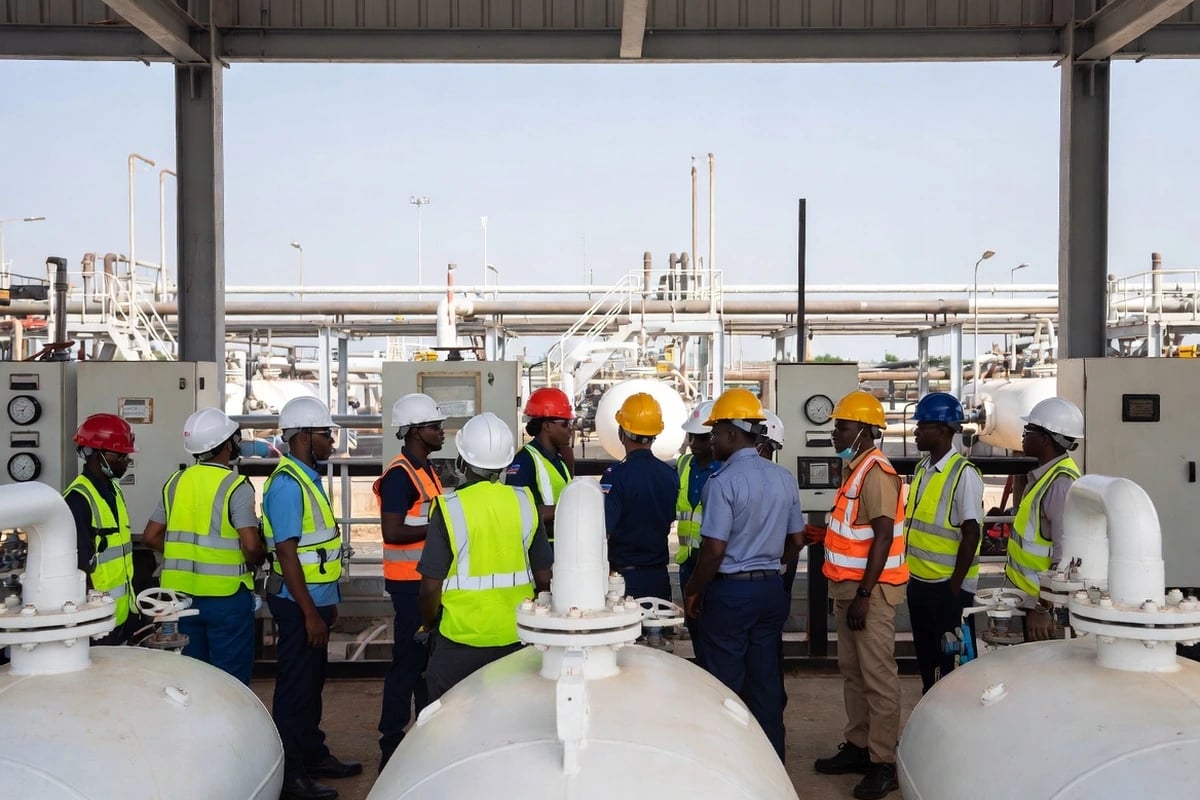
Fuel Storage & Terminal Services
Storage and terminal handling services operated under HSE and quality-assurance discipline.
For an institution that cannot tolerate supply ambiguity — a mine on continuous shift, a manufacturer running a temperature-sensitive process, an aviation ground handler under airside HSE jurisdiction — storage is not capacity, it is continuity, and the integrity of what is released matters more than the volume held. Kronix Energy provides fuel storage and terminal services across Ghana and the Lomé corridor, operated under HSE and quality-assurance discipline, since 1982. Request a supply contract — or open an account: +233 20 531 3333 (Togo / Lomé: +228 96 86 86 75).
Do You Offer Fuel Storage & Terminal Services?
Yes — Kronix Energy operates storage and terminal handling for institutional accounts: tank-farm management, supervised receipt and metering, product segregation, and documented chain-of-custody from intake to release, all under HSE and quality-assurance discipline. The service runs across Ghana and the Ghana–Togo (Lomé) corridor, in English and French. What an institution is buying is not a tank but a defended handover — a documented supply record that holds up under audit, regulatory inspection, and dispute resolution.
What Are Fuel Storage & Terminal Services?
Fuel storage and terminal services represent the physical and procedural infrastructure through which bulk petroleum products are received, held, quality-verified, and released into institutional supply chains. At the terminal level, this encompasses tank farm management, product segregation, metering, and the coordinated loading and offloading of product volumes under documented chain-of-custody protocols.
Institutions that cannot tolerate supply ambiguity — mines operating continuous shift cycles, manufacturers running temperature-sensitive processes, aviation operators under airside HSE jurisdiction, and government logistics commands — specify terminal services not merely for storage capacity, but for the discipline governing every handover. The critical variable is not volume held, but confidence in the integrity of what is released.
When to Specify Fuel Storage & Terminal Services
Any operation in Ghana or Togo running a fuel-dependent process at institutional scale faces the question of supply assurance at the terminal interface. Mining operations with remote fuel demand, manufacturing facilities managing just-in-time energy supply, aviation ground handlers maintaining product chain-of-custody for airside compliance, and public-sector fleet operations requiring audit-ready documentation all encounter scenarios where unmanaged terminal handling introduces cost, liability, and operational risk.
The specification case sharpens further when operations involve multiple product grades, bulk transfer across a supply corridor, or regulatory environments where documentation of product quality and quantity at each handover point is non-negotiable. Terminals engaged without process rigour are a liability. Terminals operated with HSE-disciplined methodology are a supply chain asset.

Methodology — The Kronix Energy Specialist Approach
-
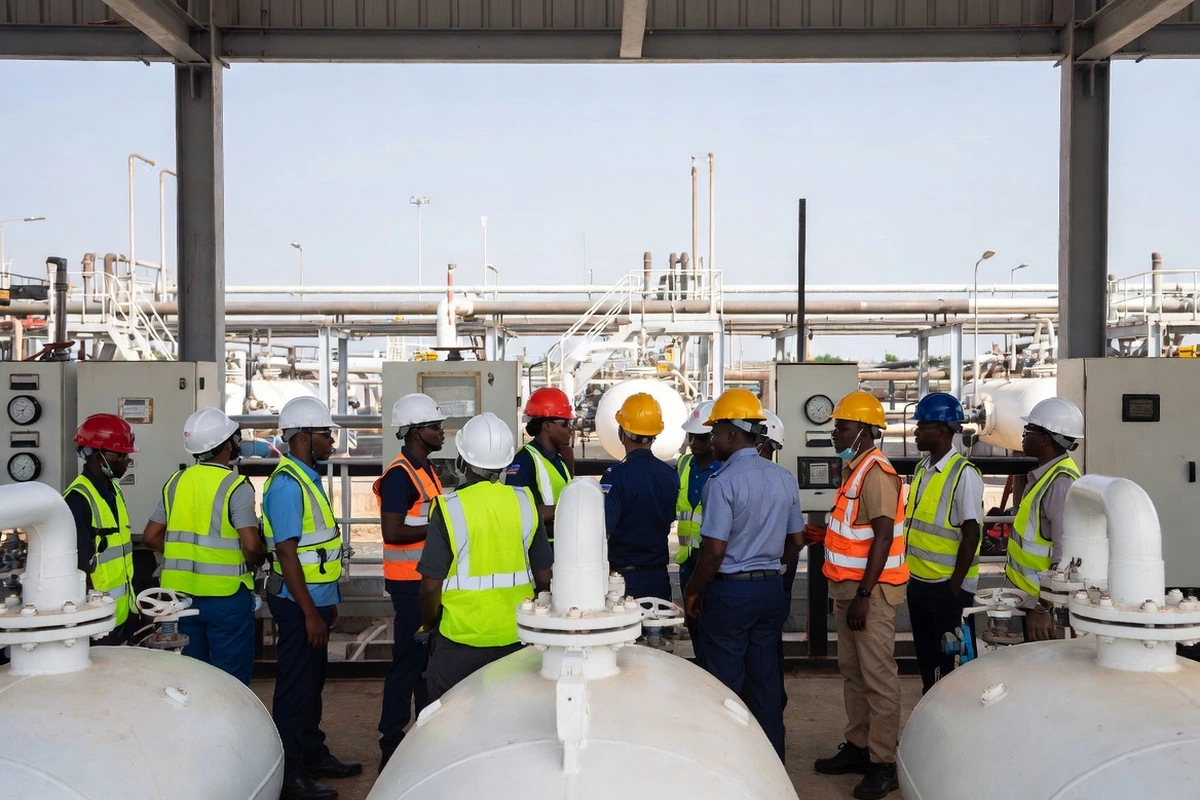
Requirement Assessment & Service Specification Prior to any product movement, Kronix Energy conducts a structured requirement assessment with the client’s operations or procurement lead. Product type, volume cadence, receiving infrastructure, and documentation obligations are mapped and fixed in a signed service specification document — eliminating ambiguity before the first delivery.
-
Tank Farm & Infrastructure Readiness Review The terminal team reviews tank condition, valve integrity, metering calibration, and spill containment status against applicable HSE standards. No product is accepted into storage until infrastructure readiness is confirmed and recorded.
-
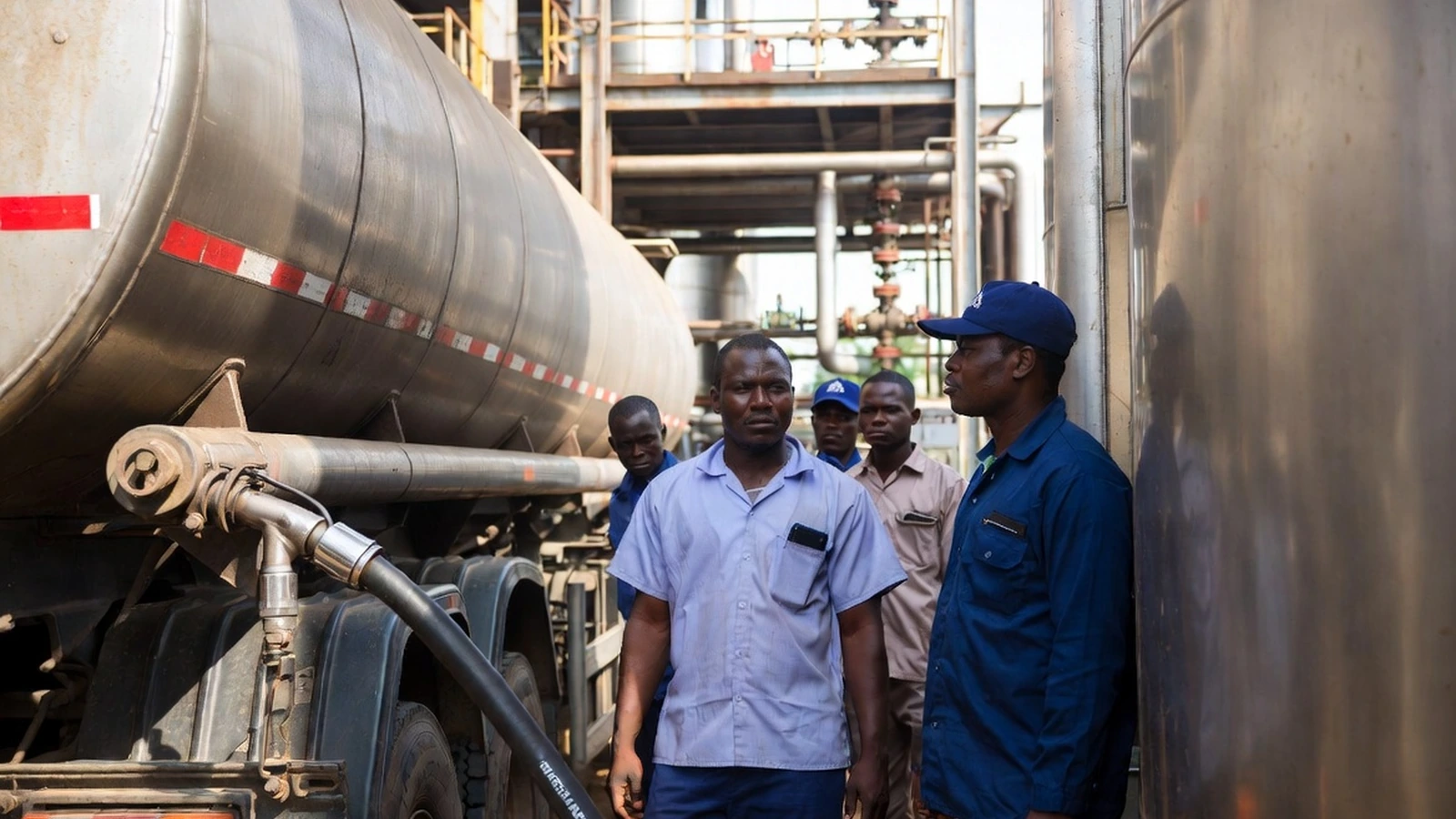
Supervised Receipt, Metering & Quality Verification All product receipts are conducted under specialist supervision. Volume is metered at intake, and product samples are drawn and documented for quality verification. Variance from specification triggers a formal deviation record before any product is cleared for client drawdown.
-
Product Segregation & Chain-of-Custody Control Where multiple clients or product grades operate within the same facility, strict segregation protocols are enforced. Chain-of-custody documentation accompanies every movement — intake to storage, storage to loading, loading to client delivery confirmation.
-
Handover Documentation & Post-Release Audit Trail At every release point, a signed handover document is generated covering metered volume, product grade, batch reference, and receiving party confirmation. These records are archived and remain available for client audit, regulatory inspection, or dispute resolution at any subsequent point.
Process Standards & Quality Framework
- HSE management aligned to ISO 45001 occupational health and safety principles
- Environmental handling protocols consistent with ISO 14001 environmental management standards
- Quality management processes operated within an ISO 9001 framework
- Product chain-of-custody documentation at every intake, storage, and release stage
- Spill containment and emergency response procedures maintained as standing operational protocol
- Independent metering and sampling at each handover point — no self-reported volumes
Outcomes for Institutional Clients
Operations that specify Kronix Energy terminal services receive more than storage capacity — they receive a documented supply record that survives regulatory scrutiny, internal audit, and forensic review. Product integrity is defended at every handover stage. Supply continuity is protected through advance scheduling and clear escalation protocols when variance occurs. The result is a terminal relationship that functions as institutional infrastructure, not a transactional arrangement.
Related Sectors & Solutions
Fuel storage and terminal services are most frequently specified alongside Bulk Fuel Supply and Fuel Logistics & Distribution for clients managing end-to-end supply chains across Ghana and Togo. Sector-specific applications are detailed under Mining Energy Supply, Aviation Fuel Services, and Government & Institutional Supply.
Regulated & To Standard
- Downstream petroleum activity in Ghana — including bulk storage and transport — is regulated by the National Petroleum Authority (NPA) under the NPA Act, 2005 (Act 691); we operate within that framework and describe only the licences and certifications we actually hold
- Product received, held, and released to the ECOWAS low-sulphur (50 ppm) standard and Ghana Standards Authority specifications (GS 140 / GS 141), with quality management operated within an ISO 9001 framework and HSE/environmental handling aligned to ISO 45001 / ISO 14001 principles (voluntary)
- Independent metering and sampling at each handover — no self-reported volumes — with a signed, archived chain-of-custody record at every intake, storage, and release stage
- Established 1982 — a real downstream operator providing storage-for-continuity to institutional accounts across Ghana and the Lomé corridor
Related Services
- Fuel Supply Contracts in Ghana — institutional supply with continuity built in
- Energy Logistics & Haulage — the corridor delivery backbone
- Fuel Supply on the Lomé Corridor — cross-border into Togo & the region
- HSE & Compliance Advisory — the discipline behind every handover