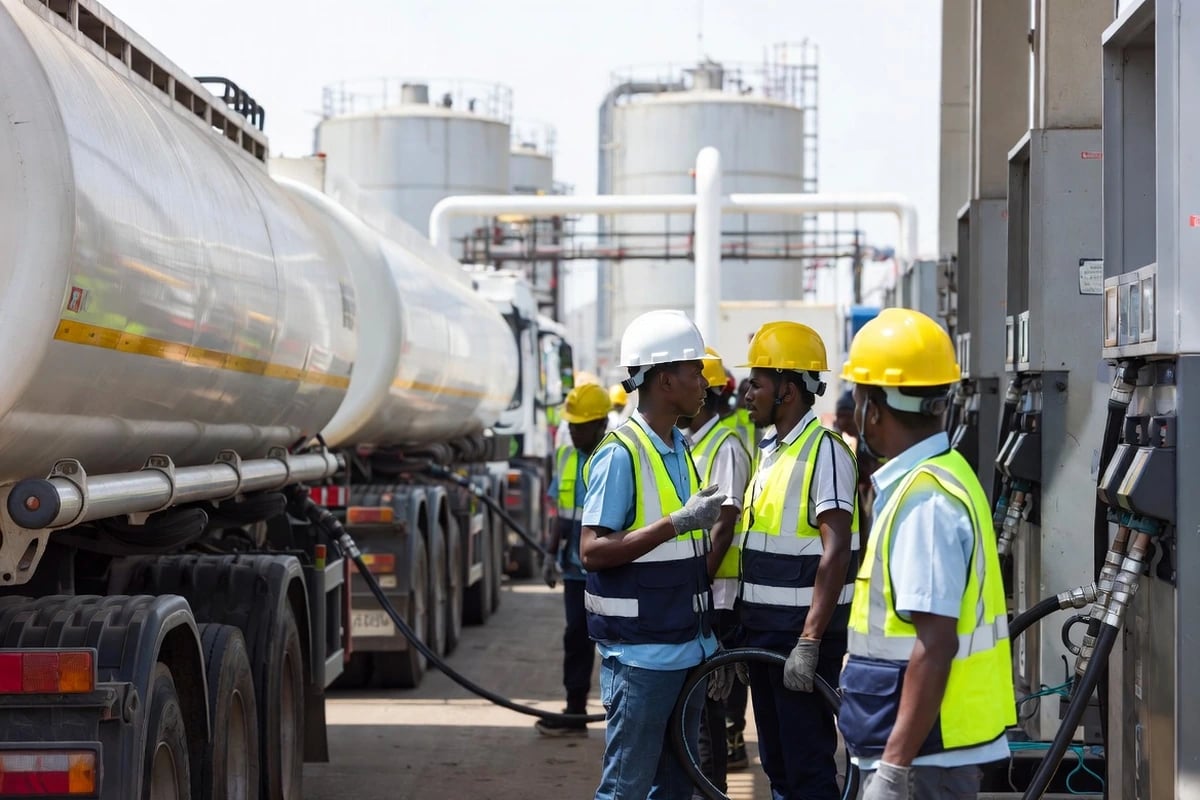
Fuel Supply & Distribution
Reliable supply and distribution of refined fuels to institutional sites across Ghana and Togo, with documented chain-of-custody from depot to delivery.
For an institution — a bank, an embassy, an aviation account, an agribusiness, a government campus — fuel supply is not a delivery, it is continuity, and running dry is not an option. Kronix Energy supplies and distributes refined petroleum to institutional sites across Ghana and the Lomé corridor, with documented chain-of-custody from depot to delivery, since 1982. Request a supply contract — or open an account: +233 20 531 3333 (Togo / Lomé: +228 96 86 86 75).
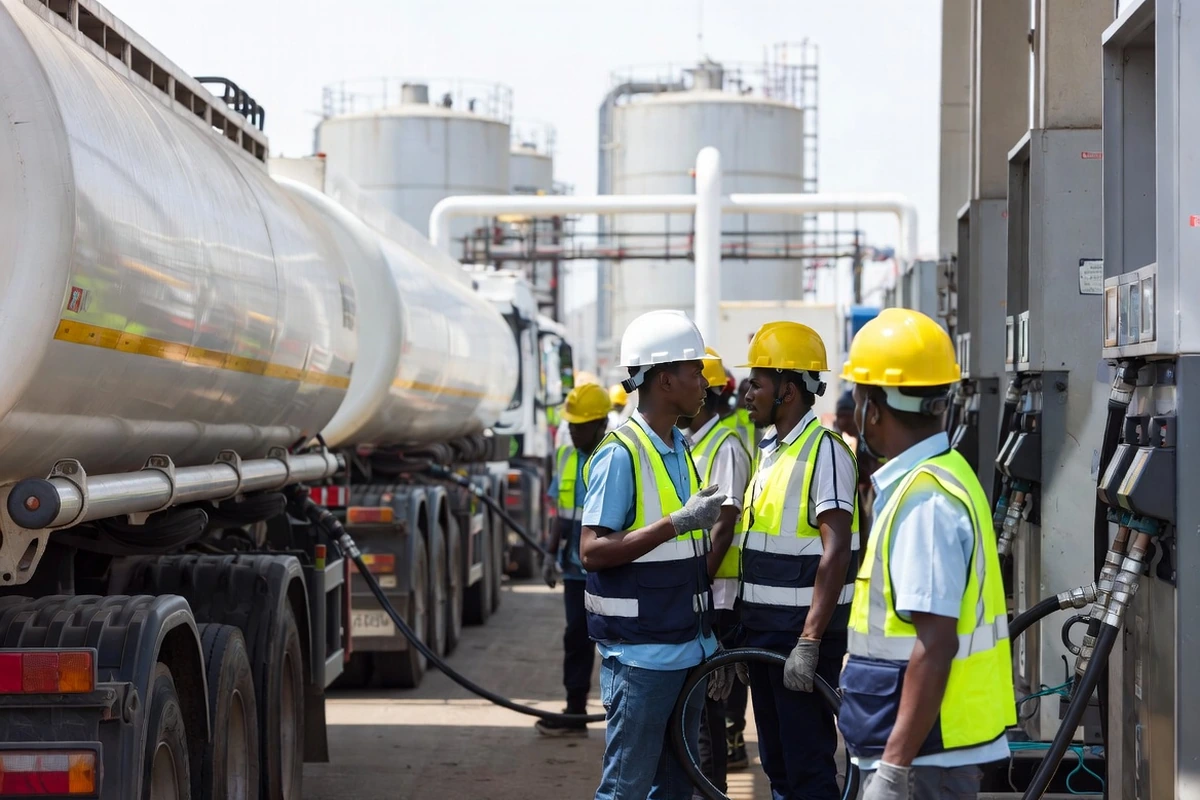

Institutional Fuel Supply & Distribution in Ghana
What Is Fuel Supply & Distribution?
Fuel supply and distribution at the institutional level is a discipline defined by process rigour, documented chain-of-custody, and the operational certainty that high-demand sites cannot function without. It encompasses the sourcing, scheduling, movement, and delivery of refined petroleum products — diesel, gasoil, and associated fuel grades — from certified depots to client sites, with every handover point recorded and verified.
Institutions that specify this service are not seeking a fill-and-go arrangement. They are commissioning a supply function that integrates with their own operational rhythms: planned maintenance windows, generator schedules, aviation turnaround cycles, mining shift sequences, and manufacturing batch programmes. The supply discipline institutions build on is one where every litre is accounted for before it leaves the loading bay and after it arrives at the receiving tank.
When to Specify Fuel Supply & Distribution
The specification threshold arises wherever fuel continuity is a core operational dependency rather than a convenience. Mining operations across Ghana and Togo require uninterrupted diesel supply for heavy equipment fleets on predetermined shift schedules. Aviation ground operations demand product quality verification at every intake. Manufacturers running continuous-process lines cannot tolerate unplanned fuel shortfalls that idle production. Government installations and institutional campuses with standby generation arrays require documented, recurring delivery programmes that align with facility management protocols.
Banking institutions and financial headquarters with critical uptime requirements for data centre backup power, diplomatic facilities in Accra, and premium hospitality operations along both coasts similarly sit within this specification class. If a site’s operational continuity is contractually or reputationally load-bearing, the fuel supply function must be engineered to match.
Methodology — The Kronix Energy Specialist Approach
-
Requirement Survey & Supply Programme Design — The engagement begins with a structured site assessment: daily and peak consumption profiling, storage tank capacity, access logistics, and any sector-specific compliance requirements. A written supply programme document is produced and agreed before first delivery.
-
Depot Sourcing & Product Quality Verification — Fuel is drawn from authorised, certified depot facilities within Ghana and Togo. Product quality is verified at source, with relevant documentation retained as part of the handover record for each consignment.
-
Scheduled Dispatch & Route Discipline — Delivery scheduling is built around the client’s operational calendar. Fleet dispatch follows documented route protocols, with each tanker movement tracked against the agreed programme.
-
Site Delivery & Custody Transfer Documentation — On arrival, delivery volume and product condition are verified jointly with the client’s receiving officer. Custody transfer documentation — dip readings, delivery notes, driver manifests — is completed and signed at the point of handover. No ambiguity survives the process.
-
Programme Review & Demand Adjustment — Kronix Energy conducts periodic supply programme reviews with institutional clients to recalibrate delivery frequency, volumes, and contingency provisions in response to operational changes. This aftercare discipline preserves supply continuity across seasonal and project-driven demand shifts.
Process Standards & Operational Framework
- Documented chain-of-custody from depot loading to site tank receipt
- HSE-disciplined dispatch and handling procedures aligned with ISO 45001 occupational safety principles
- Environmental management practices consistent with ISO 14001 frameworks
- Quality management processes structured under ISO 9001 principles
- Sector-specific compliance awareness for aviation, mining, and regulated industrial sites
- Written supply programmes reviewed and updated in cadence with client operational schedules
Outcomes for Institutional Clients
Clients who operate under a Kronix Energy supply programme gain a documented, auditable fuel function — not a transactional vendor relationship. Supply continuity is engineered into the programme rather than assumed. Every delivery produces a recorded custody transfer, giving finance, operations, and compliance teams the documentation trail that institutional governance demands. The result is a fuel supply operation that a Tier-1 bank’s facilities team, a mine’s HSE department, or an aviation ground operations director can place into their own compliance frameworks with confidence.
Regulated & To Standard
- Downstream petroleum supply and distribution in Ghana is regulated by the National Petroleum Authority (NPA) under the NPA Act, 2005 (Act 691) — we operate within that framework and describe only the licences and certifications we actually hold
- Product distributed to the ECOWAS low-sulphur (50 ppm) standard and Ghana Standards Authority specifications (GS 140 / GS 141)
- Quality, environmental, and occupational-safety processes structured under voluntary ISO 9001 / ISO 14001 / ISO 45001 principles
- Established 1982 — a real downstream operator with institutional supply and distribution experience across Ghana and the Lomé corridor
Institutional Supply Across Ghana & the Lomé Corridor
We supply and distribute to banks, embassies, aviation, agribusiness, and government accounts across Accra, Tema, Takoradi, and Kumasi, and cross-border into Lomé, Togo and Francophone West Africa — in English and French, with documented custody transfer at every handover.
Related Services
- Fuel Supply Contracts in Ghana — the institutional supply contract, built for continuity
- Standby Fuel Supply — continuity for banks, data centres, hospitals
- Fuel Supply on the Lomé Corridor — cross-border distribution into Togo & the region
- Energy Logistics & Haulage — the delivery backbone
Frequently Asked Questions
How much does fuel supply and distribution cost in Ghana? Quoted per account, indexed to the NPA price build-up (fuel is deregulated since 2015) plus account-specific factors — there is no fixed published rate, and any supplier quoting one before seeing the account is guessing.
Can you guarantee delivery continuity for a bank or aviation account? Continuity is exactly what an institutional supply programme is for — built around the account’s criticality, delivered to schedule, managed through one point of contact, and reported.
Do you distribute across the Ghana–Togo corridor? Yes — cross-border supply and distribution into Lomé and Francophone West Africa, served in English and French.
Are you licensed to distribute fuel in Ghana? Downstream supply and distribution is regulated by the NPA under Act 691; we operate within that framework, distribute to ECOWAS 50 ppm and GSA standards, and describe only the licences we actually hold.