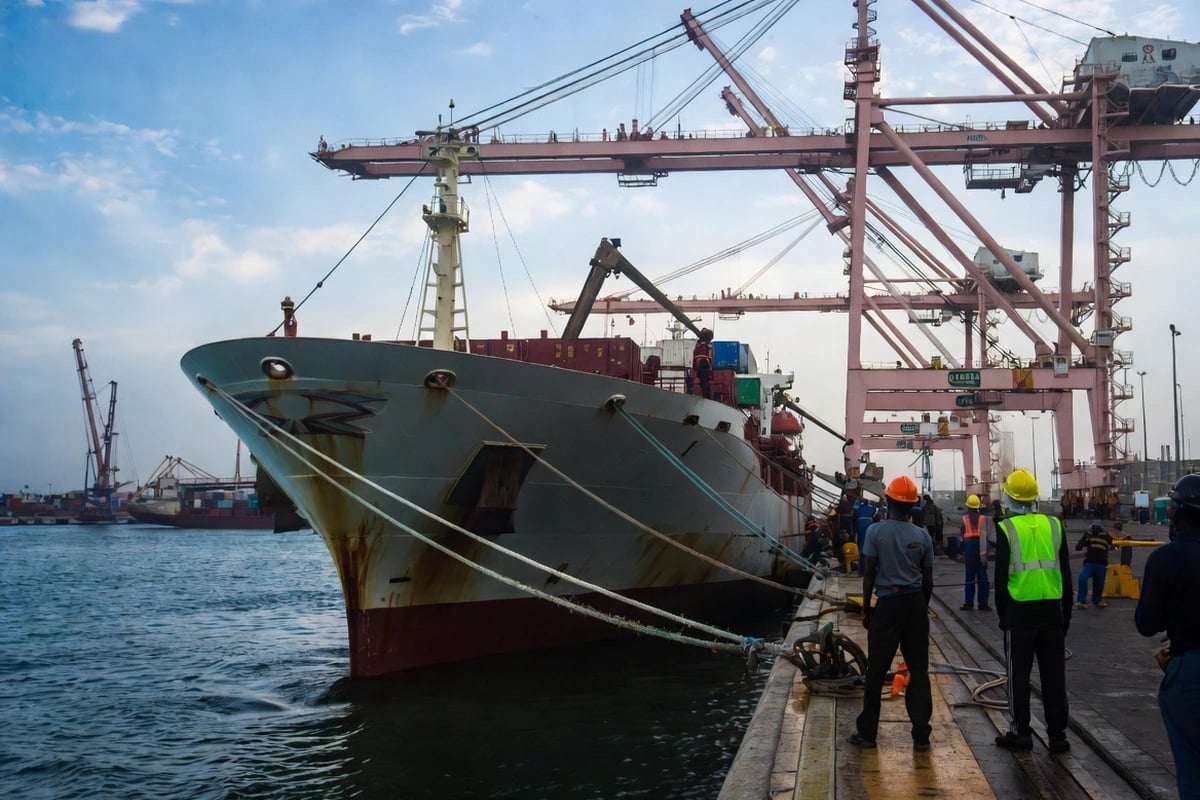
Why Marine and Bunkering Operations Specify Kronix Energy
Port operations and shipping movements demand a petroleum supply partner whose process discipline matches the operational tempo of commercial vessels, harbour authority schedules and cargo coordination cycles. A delayed or off-specification bunker stem does not merely inconvenience an operator — it holds a vessel at berth, disrupts voyage scheduling and triggers demurrage liabilities that accumulate by the hour. Kronix Energy operates within that understanding, structuring every marine and bunkering supply engagement around documented procedures, pre-stem surveys and chain-of-custody records that meet port authority requirements at both Tema and Lomé.
The marine sector in Ghana and Togo presents a supply environment where fuel quality, stem-timing precision and HSE compliance converge without margin for deviation. Kronix Energy’s process framework is built specifically for this convergence — not adapted from a general supply model, but structured from the outset around the handover documentation, quantity verification protocols and safety briefings that vessel operators and port superintendents require before a stem is authorised.
Specification Requirements Unique to Marine and Bunkering
Marine fuel supply is governed by a layered compliance environment that sits above general petroleum distribution standards. Fuel specifications must align with vessel engine requirements and international quality benchmarks, and every stem must be accompanied by a Bunker Delivery Note carrying full traceability from source to receiving vessel. Port authority permit requirements, IMO sulphur compliance thresholds for relevant vessel categories, and pre-bunkering safety checklists are non-negotiable procedural elements — not optional add-ons.
In the Ghanaian and Togolese port corridors, supply operations must also account for tidal windows, anchorage scheduling constraints and harbour coordination protocols that compress available bunkering time. Kronix Energy structures its marine supply engagements with pre-stem logistics confirmation, designated HSE-briefed delivery personnel, and documentation packages that are complete at the point of handover — eliminating post-stem administrative delays that affect vessel clearance.
Recommended Services for Marine and Bunkering Operations
- Marine Gasoil (MGO) and Intermediate Fuel Oil (IFO) supply to commercial vessels at Tema Port and Lomé Port
- Bunker Delivery Note documentation and quantity verification with independent meter-reading protocols
- Pre-stem survey and safety briefing coordination aligned with port authority and vessel superintendent requirements
- Scheduled supply agreements for repeat vessel calls with confirmed stem windows and documentation pre-staging
- Emergency and short-notice bunkering coordination for unplanned vessel arrivals or schedule-displaced stems
Notable Project Types
Kronix Energy’s marine supply engagements span a range of operational contexts across both port corridors. Scheduled supply programmes for institutional shipping lines operating regular West Africa rotations represent one pattern — these arrangements require confirmed stem windows, pre-lodged documentation packs and a consistent quality verification process that a vessel’s superintendent can sign against on each call.
Short-notice and emergency bunkering for vessels diverted or delayed along the Ghana–Togo coastline represents a second distinct pattern, where supply mobilisation speed and documentation completeness must be achieved simultaneously under time pressure. In both contexts, Kronix Energy’s process structure does not change — the same pre-stem survey, safety briefing and handover documentation applies whether the engagement is scheduled months in advance or confirmed within hours.
Compliance and Standards
- IMO sulphur content compliance — fuel sourced and documented to applicable sulphur limits for vessel category and trading area
- MARPOL-aligned handling procedures — spill prevention protocols and containment measures observed at every stem
- ISO 9001 quality management framing — documented supply procedures with multi-stage verification at order confirmation, dispatch and delivery
- ISO 14001 environmental management framing — marine environment risk controls embedded in operational procedures for port-side fuel transfer
- ISO 45001 occupational health and safety framing — HSE briefings and personal protective equipment requirements enforced for all delivery personnel
- Bunker Delivery Note traceability — complete chain-of-custody documentation retained per stem for port authority and client records
Our Supply for Marine & Shipping
- Fuel Supply Contracts — scheduled bunkering and terminal supply on a continuity contract
- Fuel Supply on the Lomé Corridor — bunkering and supply across the Tema–Lomé port corridor
- Industrial Fuel Solutions — gasoil for terminal generators, handling equipment and tugs
- Petroleum Supply Cost Guide — how contract supply is priced against the NPA build-up, honestly
Regulated & To Standard
Downstream petroleum supply in Ghana is regulated by the National Petroleum Authority (NPA) under the NPA Act, 2005 (Act 691) — the downstream regulator, not the Energy Commission and not the Petroleum Commission (which oversees upstream). We operate within that NPA-regulated framework and supply product to the ECOWAS low-sulphur (50 ppm) fuel standard and Ghana Standards Authority specifications (GS 140 / GS 141), with IMO sulphur limits and MARPOL handling observed at every stem; ISO 9001 / 14001 / 45001 alignment is voluntary. Contract pricing is quote-only, indexed to the NPA price build-up — there is no fixed published rate, and we describe only the licences and certifications we actually hold.
Set up a bunkering or terminal supply contract — +233 20 531 3333 (Togo / Lomé: +228 96 86 86 75).