Industrial Fuel Solutions
Tailored fuel solutions for mines, manufacturers and large industrial operations, structured around continuity of supply.
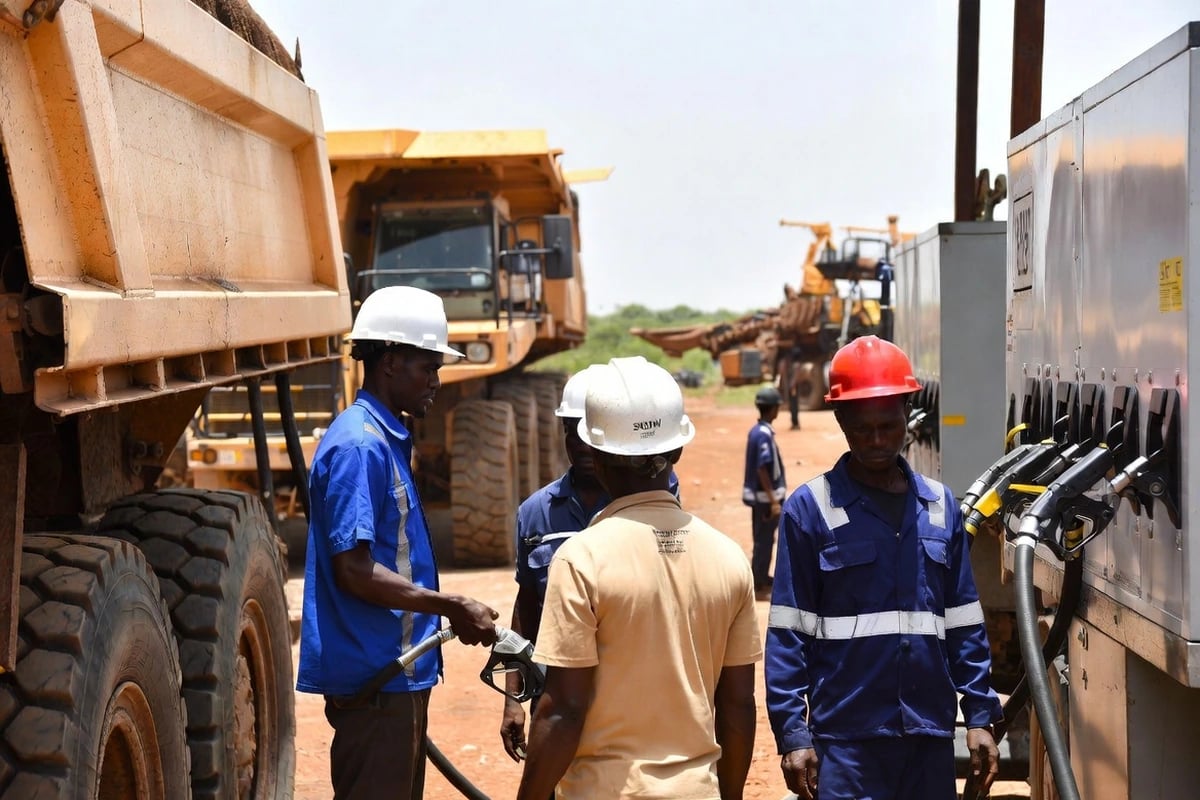
For a mine, a manufacturer, or a large industrial complex, fuel is not an ancillary input — it is the operational lifeblood of every generator, haul truck, kiln and process line on site, and a gap in supply is halted production. Kronix Energy designs industrial fuel solutions around the throughput, storage and HSE reality of each site, across Ghana and the Lomé corridor, since 1982. Request a supply contract — or open an account: +233 20 531 3333 (Togo / Lomé: +228 96 86 86 75).
What Are Industrial Fuel Solutions?
Industrial fuel solutions represent a structured, process-governed framework for supplying, scheduling and managing petroleum products at the scale and reliability that large operational sites demand. For mines, manufacturers and heavy industrial complexes across Ghana and Togo, fuel is not an ancillary input — it is the operational lifeblood of every generator, haul truck, kiln and process line on site. A failure in supply continuity translates directly into halted production, missed output targets and compounding operational cost.
Kronix Energy designs industrial fuel solutions around the specific throughput requirements, storage configurations and HSE obligations of each client. Every engagement is documented from initial site assessment through to standing delivery schedule, with traceability at each handover point and compliance framing aligned to the regulatory environments of both Ghana and Togo.
When to Specify Industrial Fuel Solutions
Industrial fuel solutions are specified when the operational scale and criticality of a site exceed what ad hoc procurement can reliably serve. Mining operations running continuous extraction cycles, manufacturing plants dependent on uninterrupted thermal or mechanical processes, and large industrial parks managing multi-facility energy demand all share a common requirement: supply that arrives on schedule, at the correct specification, with documentation in order before the tanker departs.
This service tier is equally appropriate for captive power infrastructure at remote or peri-urban industrial sites where grid dependency is impractical and generator uptime is mission-critical. Any operation whose production continuity, safety obligations or regulatory compliance depends on a predictable, auditable fuel supply chain is the precise client for whom this framework was built.


Methodology — The Kronix Specialist Approach
-
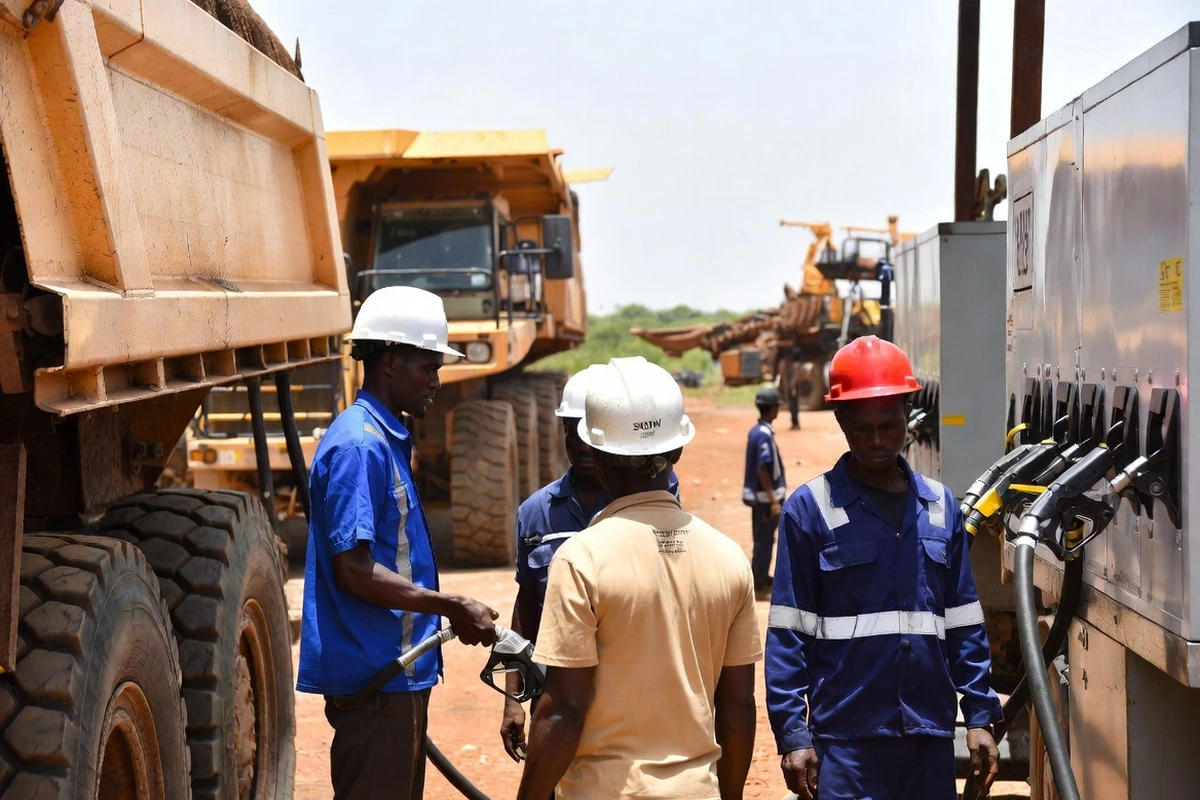
Site Assessment & Demand Profiling. Kronix specialists conduct a structured on-site assessment, documenting storage capacity, consumption patterns, equipment types, access constraints and any HSE conditions governing fuel handling on the facility. This assessment forms the basis of a formal demand profile reviewed and confirmed with the client before any supply schedule is committed.
-
Supply Structure Design. Drawing on the demand profile, the Kronix team designs a supply structure that addresses delivery frequency, product specifications, redundancy provisions and documentation flow. Each parameter is set in a written supply framework — not approximated through informal agreement.
-
HSE & Compliance Alignment. Prior to first delivery, all handling protocols, safety data sheets and site-specific compliance requirements under Ghanaian or Togolese regulatory frameworks are reviewed, cross-referenced and filed. No delivery proceeds until the compliance documentation package is complete.
-
Scheduled Delivery Execution. Deliveries are executed against the agreed schedule, with each handover supported by documentation: delivery dockets, quantity verification records and product batch references. Deviations from schedule or specification are logged and communicated in advance, never absorbed silently.
-
Performance Review & Supply Optimisation. At agreed intervals, Kronix conducts a structured review of supply performance against the client’s operational data. Consumption trends, lead-time performance and any site-condition changes are assessed, and the supply framework is adjusted accordingly.
Supply Parameters & Standards
- Petroleum products supplied to prevailing national and international specification standards for the relevant grade
- HSE handling protocols aligned with ISO 45001 occupational health and safety principles
- Environmental management practices structured in accordance with ISO 14001 principles
- Quality management processes governed under ISO 9001 quality management frameworks
- Full documentation chain maintained from origin confirmation through to site handover signature
- Delivery scheduling and demand records retained for client audit access
Outcomes for Industrial Operations
Clients specifying this framework receive a supply structure built around their operational reality — not a generic delivery arrangement. Production downtime attributable to fuel supply failure is systematically reduced through structured scheduling and documented escalation protocols. HSE exposure at the point of fuel handling is managed through pre-agreed procedures, not left to on-the-day discretion. The documentation record generated across each delivery cycle provides the audit trail that procurement managers, operations directors and regulatory bodies require.
Related Sectors and Solutions
Industrial fuel solutions intersect closely with Kronix Energy’s broader institutional service portfolio. Operations with captive power and standby requirements draw on our standby fuel supply, bulk procurement is structured through our bulk petroleum trading advisory, and the delivery backbone is handled through our energy logistics and haulage capability — all to the same documented, process-led standard across Ghana and the Lomé corridor.
Regulated & To Standard
- Downstream petroleum supply in Ghana is regulated by the National Petroleum Authority (NPA) under the NPA Act, 2005 (Act 691) — we operate within that framework and describe only the licences and certifications we actually hold
- Product supplied to the ECOWAS low-sulphur (50 ppm) standard and Ghana Standards Authority specifications (GS 140 / GS 141)
- HSE and quality practices structured in accordance with ISO 45001, ISO 14001 and ISO 9001 principles (voluntary frameworks we align to)
- Established 1982 — a real downstream operator with industrial supply experience across Ghana and the Lomé corridor
Related Services
- Standby Fuel Supply — continuity for captive-power and mission-critical sites
- Bulk Petroleum Trading — structuring bulk procurement, indexed to the NPA build-up
- Energy Logistics & Haulage — the delivery backbone across Ghana & the corridor
- HSE Compliance Advisory — the safety and compliance discipline behind every delivery
- Fuel Supply on the Lomé Corridor — cross-border into Togo & the region