The problem
Institutional buyers need a documented, HSE-disciplined source for lpg supply & distribution.
Our approach
LPG Supply & Distribution
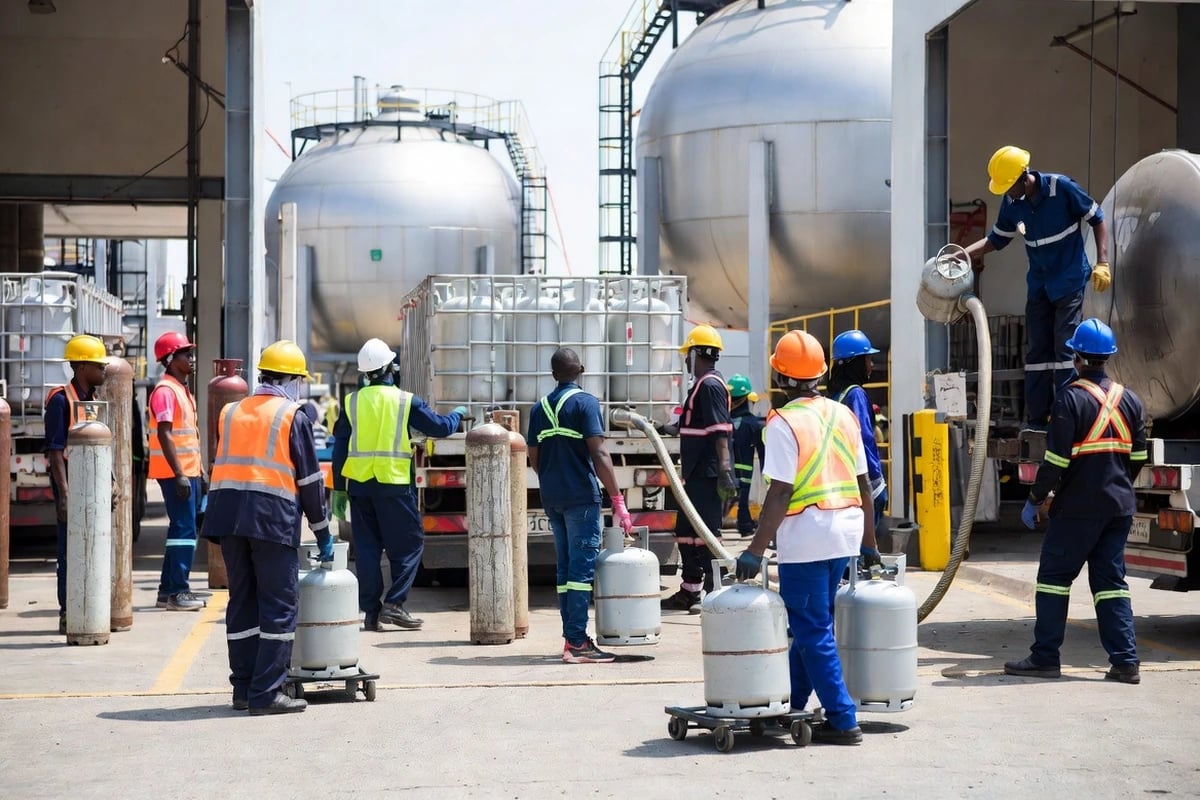
LPG Supply & Distribution delivered to institutional standard — structured procurement, chain-of-custody discipline, documented handover.
The Challenge
Liquefied petroleum gas occupies a critical position in Ghana and Togo’s industrial and institutional energy landscape — powering manufacturing processes, catering operations across hospitality and healthcare, and supporting essential functions in government facilities. Yet institutional LPG procurement remains exposed to supply fragmentation, inconsistent documentation, and handover gaps that undermine safety compliance and operational continuity. A hotel kitchen, a pharmaceutical production line, or a hospital facility cannot absorb the consequences of a mismanaged delivery or an undocumented custody transfer.
The regulatory and HSE environment governing LPG supply demands rigour at every link in the chain — from procurement and in-transit handling to final decant and sign-off. For institutions already operating under audit scrutiny — banks, mines, manufacturers, and government entities — an LPG supply relationship built on informal arrangements introduces liability exposure that their governance frameworks cannot absorb. The gap between commodity supply and institutional-grade LPG distribution is, in practice, the difference between a vendor and a structured supply partner.
The Kronix Energy Solution
Kronix Energy approaches LPG supply and distribution through a process architecture designed specifically for institutional clients. Before any delivery programme commences, a pre-execution survey documents the receiving facility’s storage configuration, demand cadence, and applicable safety parameters. This specification sign-off becomes the baseline against which every subsequent delivery is measured — eliminating ambiguity at the point of handover.
Distribution operations are governed by a multi-stage documentation protocol. Chain-of-custody records accompany each consignment through transit and are countersigned at delivery by authorised facility personnel. Variance checks at each stage allow deviations to be identified and resolved before they compound into operational or compliance incidents. Post-delivery, a documented aftercare schedule confirms storage integrity and supports the client’s internal HSE reporting requirements.
This methodology is calibrated to the operating environments of Ghana and Togo, accounting for regulatory frameworks, logistical infrastructure, and the specific demand patterns of the sectors Kronix Energy serves. The discipline embedded in this process is precisely the supply foundation that institutional operations require.
Supply & Distribution Specification
- Pre-execution facility survey with written specification sign-off prior to programme commencement
- Chain-of-custody documentation maintained from source through to final facility handover, countersigned at each stage
- Multi-stage QC checkpoints during transit and decant — deviations logged and resolved within the active delivery window
- HSE-disciplined handling aligned to occupational health and safety management principles consistent with ISO 45001 frameworks
- Demand-pattern mapping to establish cadenced replenishment schedules, reducing emergency procurement exposure
- Post-delivery documentation package issued to client for internal audit, compliance, and HSE reporting purposes
Typical Engagement Profile
A standard institutional LPG supply engagement spans the full demand cycle of the client facility — from initial needs assessment and specification sign-off through to ongoing documented replenishment. Clients typically include manufacturing operations requiring process-heat continuity, hospitality groups managing large-scale catering infrastructure, healthcare and pharmaceutical facilities with uninterruptible operational requirements, and government entities held to public-sector compliance standards. Across both Ghana and Togo, engagements are structured around the client’s operational calendar, with supply schedules formalised in advance and adjusted against documented consumption data rather than reactive ordering.
Outcomes
- Elimination of handover ambiguity through countersigned chain-of-custody documentation at every delivery point
- Reduction in emergency procurement events through cadenced, demand-mapped replenishment scheduling
- Strengthened HSE compliance posture, with post-delivery records available to support client audit and regulatory reporting
- Consistent supply continuity for critical institutional operations across Ghana and Togo, regardless of broader market volatility
- A structured supply relationship that functions as an operational asset — not a transactional arrangement — for institutions that cannot afford interruption